LaRoche-Vacquié Haut Armagnac
In 1986, Bruno & Sylvie Compagnon purchased LaRoche-Vacquié (also known as Domaine de Bacqué or Vacquié), which at that time was a prune and apple farm because the “phylloxera plague” had wiped out a vast majority of the vineyards in the area in the late 19th century. As other places had replanted and rebuilt, the sub region of Haut-Armagnac had transitioned into cereals and fruit orchards leaving the market empty of Haut Armagnac.
A Renaissance in Haut Armagnac.
Although the family became one of the largest producers of Pruneaux d’Agen (prunes), the irreductible Bruno Compagnon decided to replant the vineyards of LaRoche-Vacquié in 1990 to revive Haut Armagnac which had disappeared from production, eventually returning the entire estate to its original plantation as a vineyard.
In 1997, the Minister of Agriculture bestowed the insignia of Knight of the Order of Agricultural Merit to Bruno Compagnon for reintroducing Haut Armagnac. Since then, the family has carried on its traditions with dedication and respect for the exceptional terroirs and age-old savoir faire (know-how) of the property.
Terroir
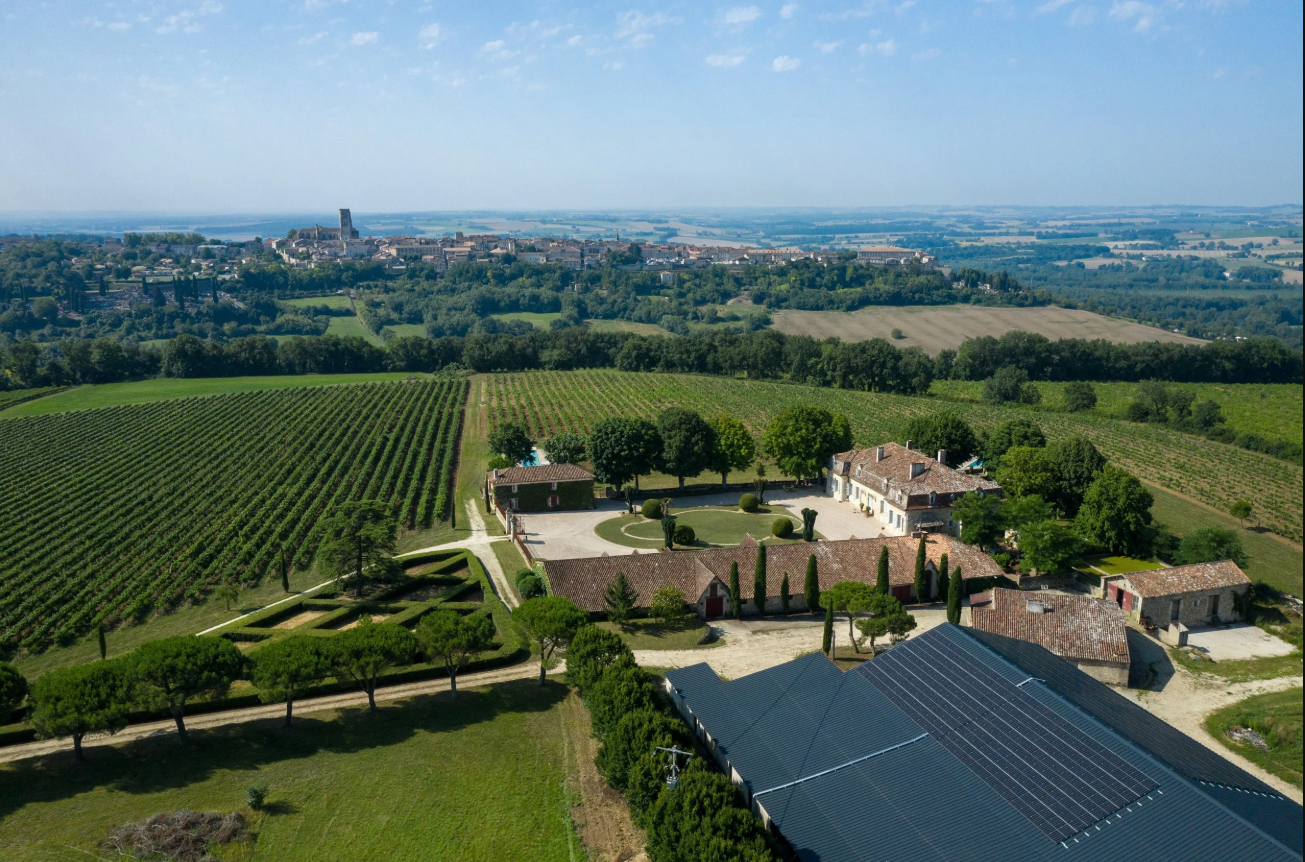
LaRoche-Vacquié overlooks the historic town of Lectoure, which is considered one of the most beautiful villages in Gascony. Since 2008, the Compagnons have converted the vineyards of LaRoche-Vacquié into a fully organic estate. Today, the vineyard counts 25 hectares (62 acres) in production.
Soil: limestone with a thin layer of clay and chalky earth.
Vineyards: Colombard and Ugni Blanc grapes.
Environmental Spotlight
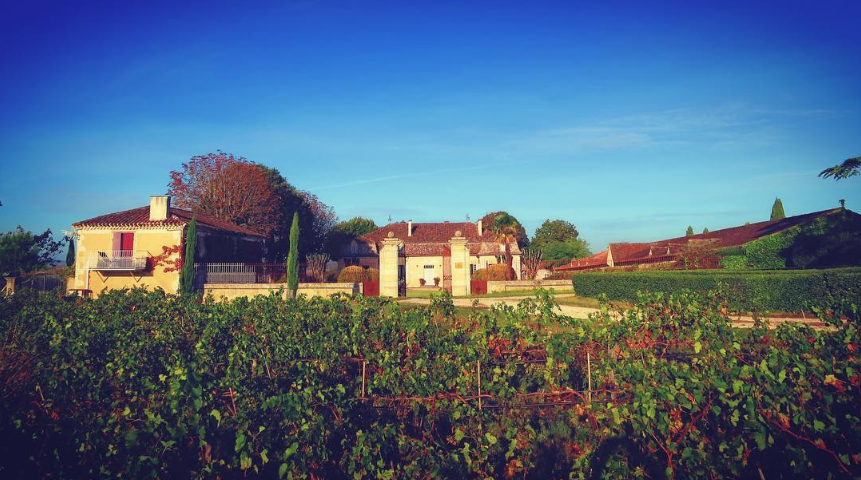
After 20 years of intensive production of Pruneaux d’Agen, Bruno realized that the fauna and flora of the estate were critically disintegrating and decided to act. He stopped using all pesticides on his plum trees.
Recognizing the future of farming and the benefits to the land, he converted the entire estate to organic farming in 2008.
He removed all the plum trees and after letting the land lie fallow for 3 years, earthworms, slugs, butterflies and birds began reappearing.
Soil regeneration was just as impressive, with nitrogen making a big comeback which plays a major role in photosynthesis, a perfect bed for the vines to gain their full growth and development.
Thus, almost no external biological input is used on the vineyard. Following this logic of sustainable development, a solar farm was created in 2011 allowing full energy autonomy.

What is Haut Armagnac?
Only 1% of Armagnac comes from Haut Armagnac.
Haut Armagnac represents only about 1% of the total Armagnac production for several reasons; because of the phylloxera at the end of the 19th century which wiped out all the vines in the region, but more importantly because the land is rich, which attracts a much more diverse agriculture to the region.
The region is sometimes referred to as “White Armagnac” because of the composition of its soils: the presence of clay with thin layers of outcropping limestone and sometimes pebbles gives the eau-de-vie an atypical profile.
Its climate is mostly Mediterranean with sunny autumns allowing perfect ripening of the grapes before the harvest.
Haut-Armagnac is a full and very aromatic eau-de-vie. The originality and rarity of this eau-de-vie makes it a very popular product.
The Secretary of the Société d’Agriculture de Mirande in his 1859 report goes on and says that "Hauts Armagnacs have [...] the merit of a delicate flavor, and enjoy a great reputation."
All our Hauts Armagnacs are:
Naturally grown, with no pesticides, on a sustainable estate powered by solar energy.
From estate-grown Ugni Blanc and Colombard grapes.
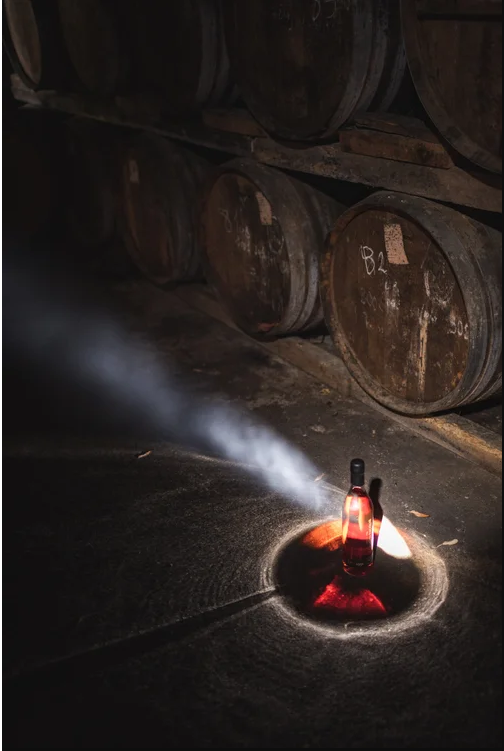
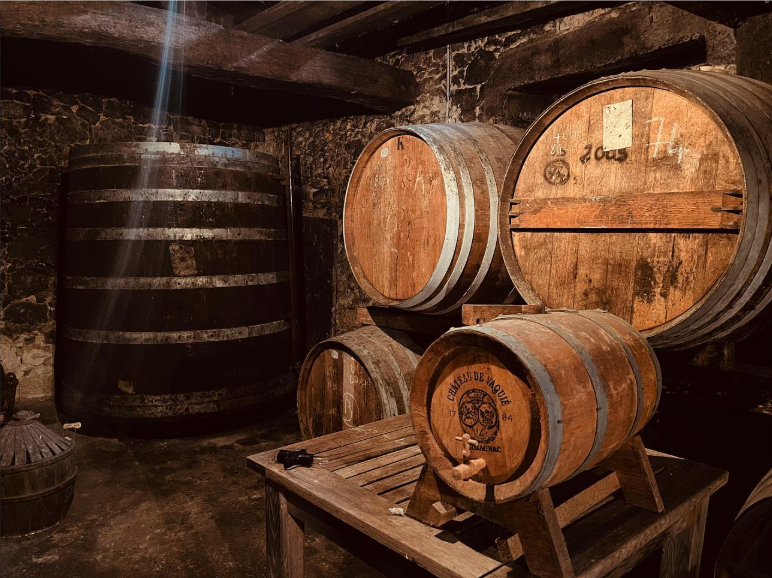
Single distilled, single cask, not reduced, not filtered, and only a few casks are produced each year.
Uniquely aged in mostly Tronçais sessile oak.
Collectible: Sealed, labeled, dated and numbered by hand.
LRV by LaRoche-Vacquié
Created by LaRoche-Vacquié, LRV is an experimental atelier dedicated to freedom, curiosity, and unique expression.
A cask too singular to fit.
A blend never meant to exist.
An accident worth preserving.
Limited. Unrepeatable. Guided by Instinct.
Haut Armagnac Double Oak 2019
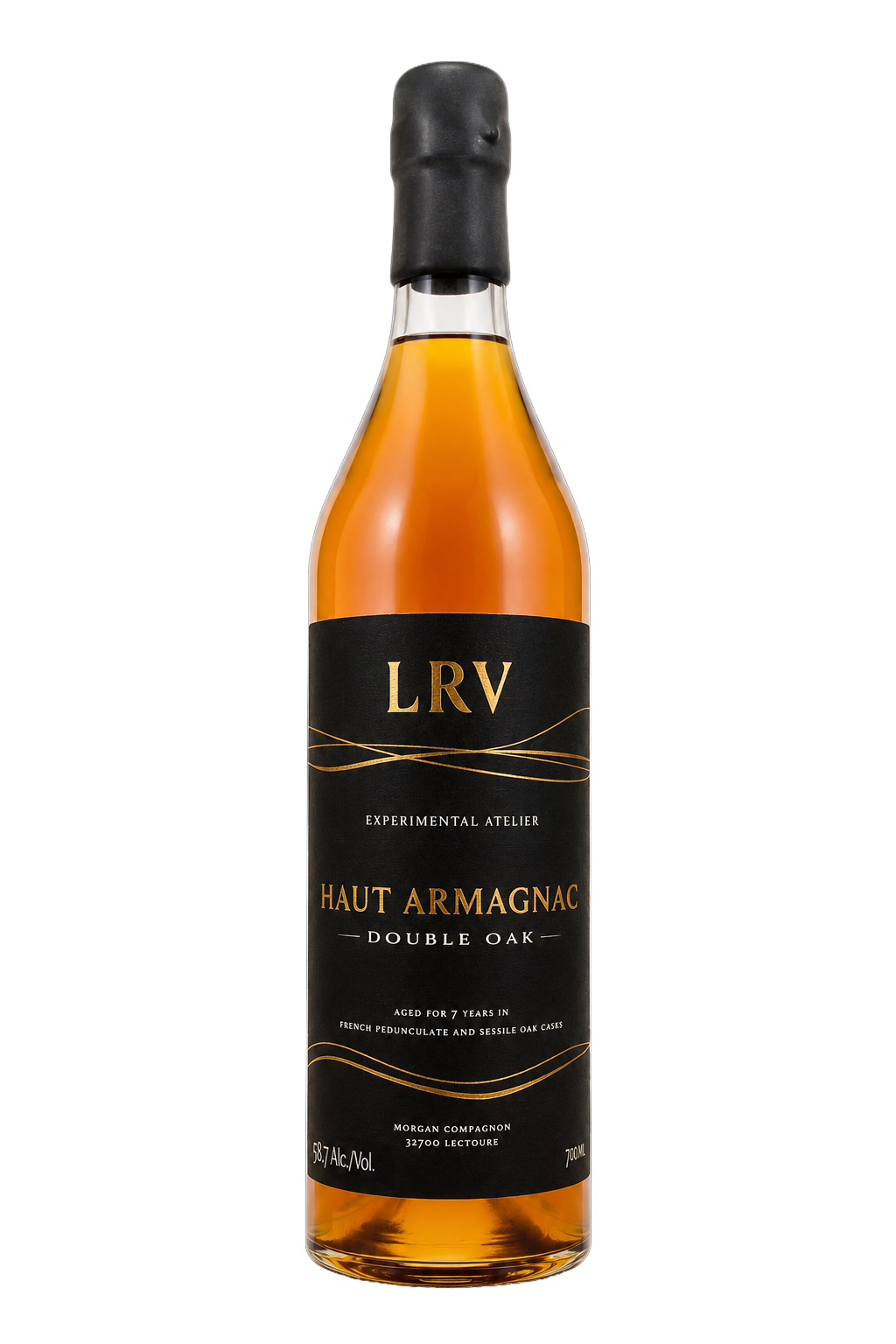
Release: LRV-02
ABV: 58.7%
Distilled in 2019, bottled in 2026.
Aged 7 years in French pedunculate (Gascon) and sessile oak(Tronçais).
Cask Number: 117
Only 156 bottles left for this bottling.
Unfiltered.
Incredibly fresh and vibrant, with bright yellow fruit and an inviting profile.
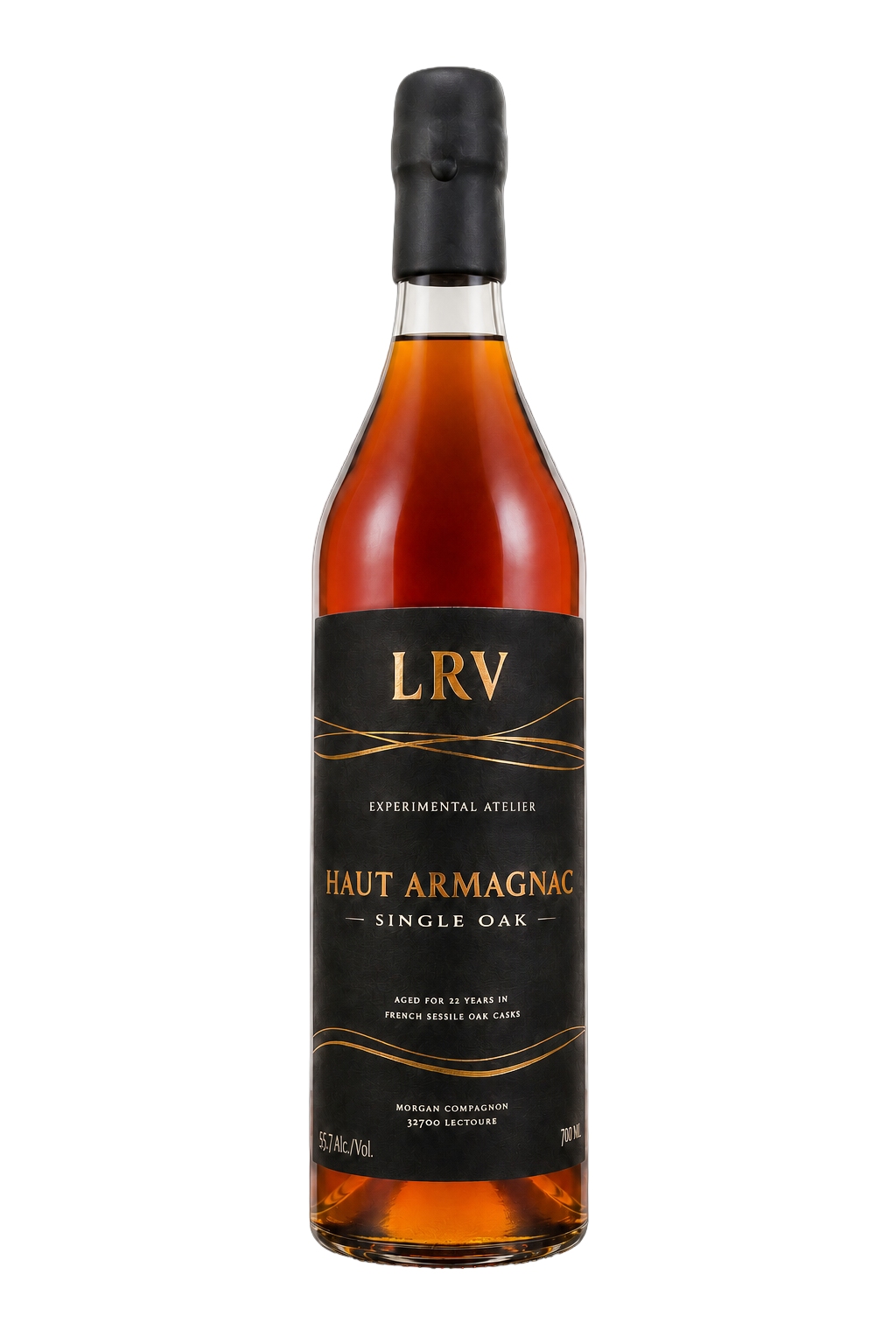
Haut Armagnac Single Oak 2004
Release: LRV-01
ABV: 55.7%
Distilled in 2004, bottled in 2026.
Aged 22 years in French sessile oak (Tronçais).
Cask Number: 81 bis
24 bottles left! Cask is finished.
Unfiltered.
Layered and toasted, with gentle spice and a lingering vanilla finish.
LaRoche-Vacquié
Vintage Haut Armagnac
Single Cask - Cask Strength - Unfiltered
“Haute Couture in Haut Armagnac”
LaRoche-Vacquié is the only Haut Armagnac producer to have vintages dating back to 1991.
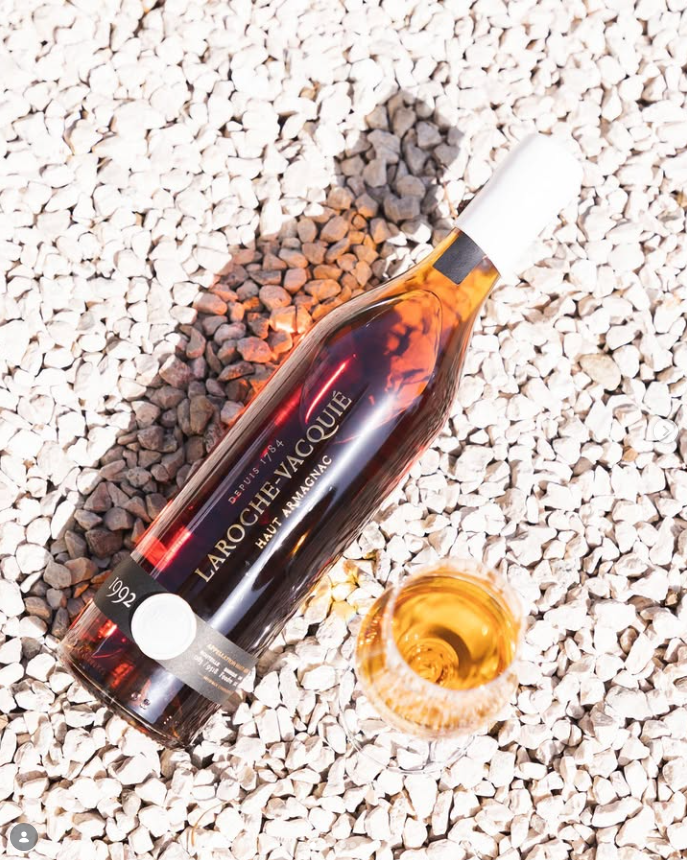
Haut Armagnac 1992
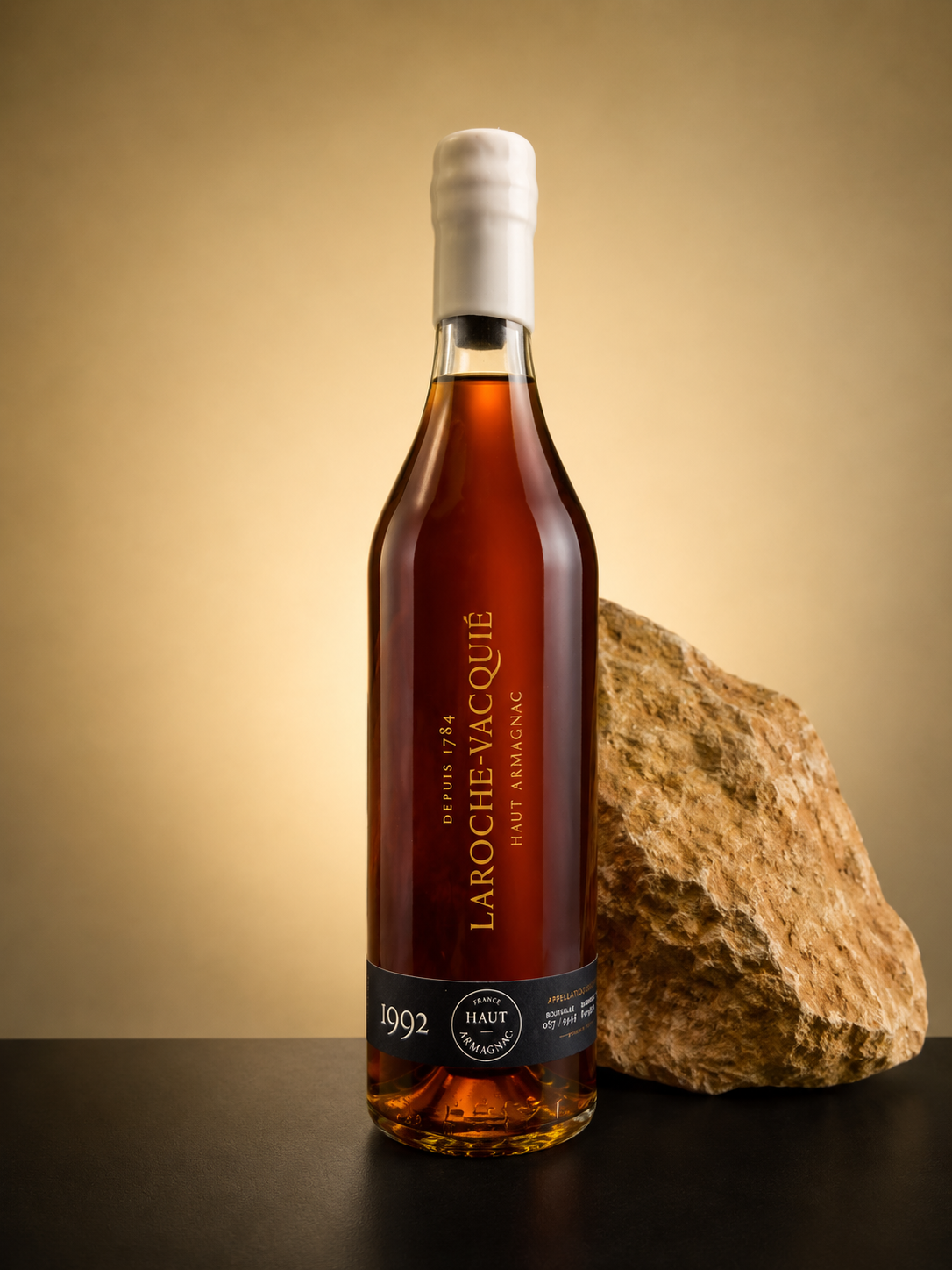
Single Cask - Cask Strength
Unfiltered - Distilled in 1992
Aged in Sessile Oak for 34 years.
1992 — ABV: 44.2% / Single Cask, Cask Strength, Unfiltered
Only 48 bottles left for this bottling.
Within this bottle lies a striking originality with refined Jamaican rum nuances: toasted nuts and dried fruits, layered with caramel and delicate tea, finishing with warm spices and the quiet soul of precious woods; complex and distinctive.
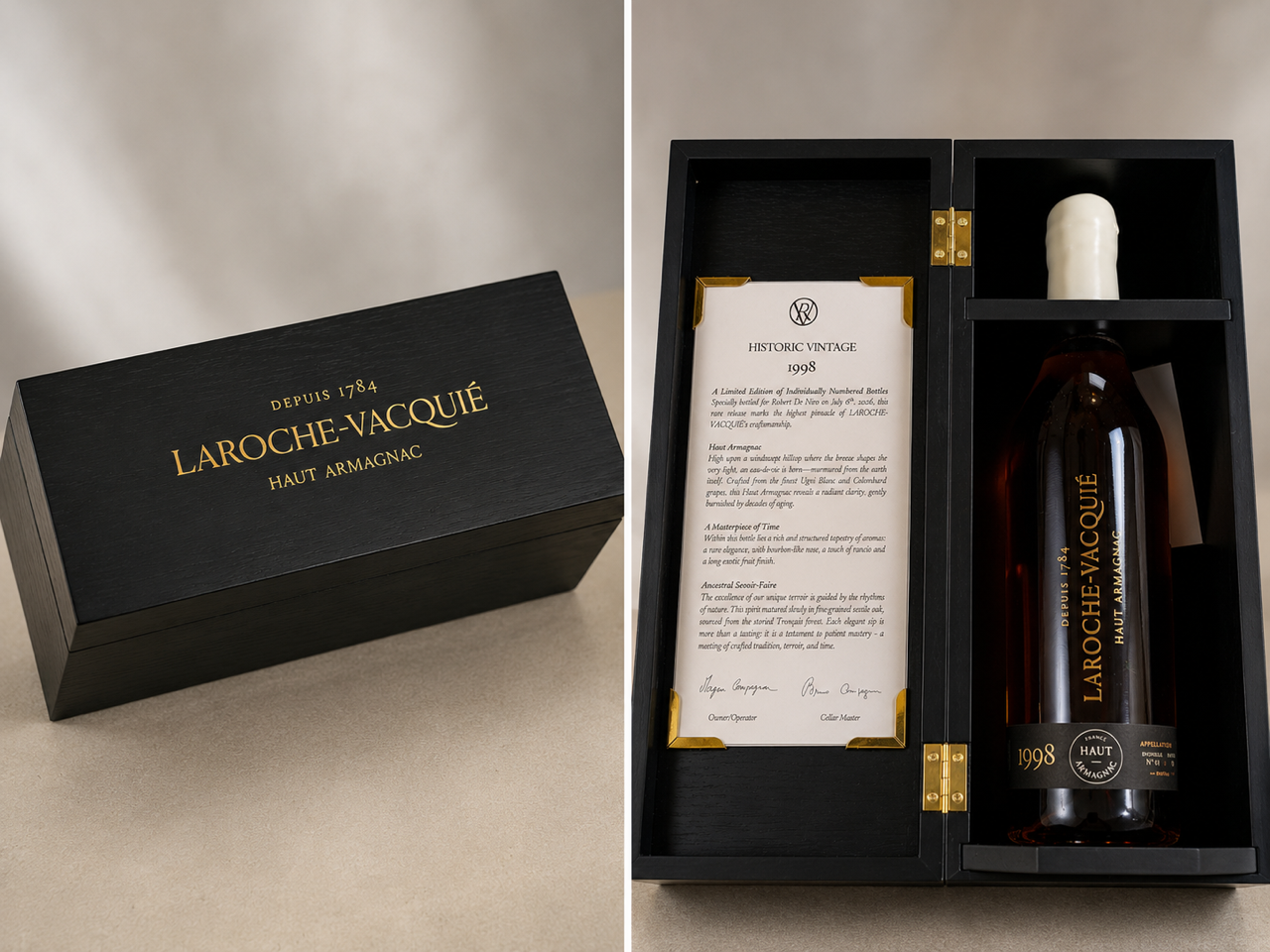
Haut Armagnac 1998
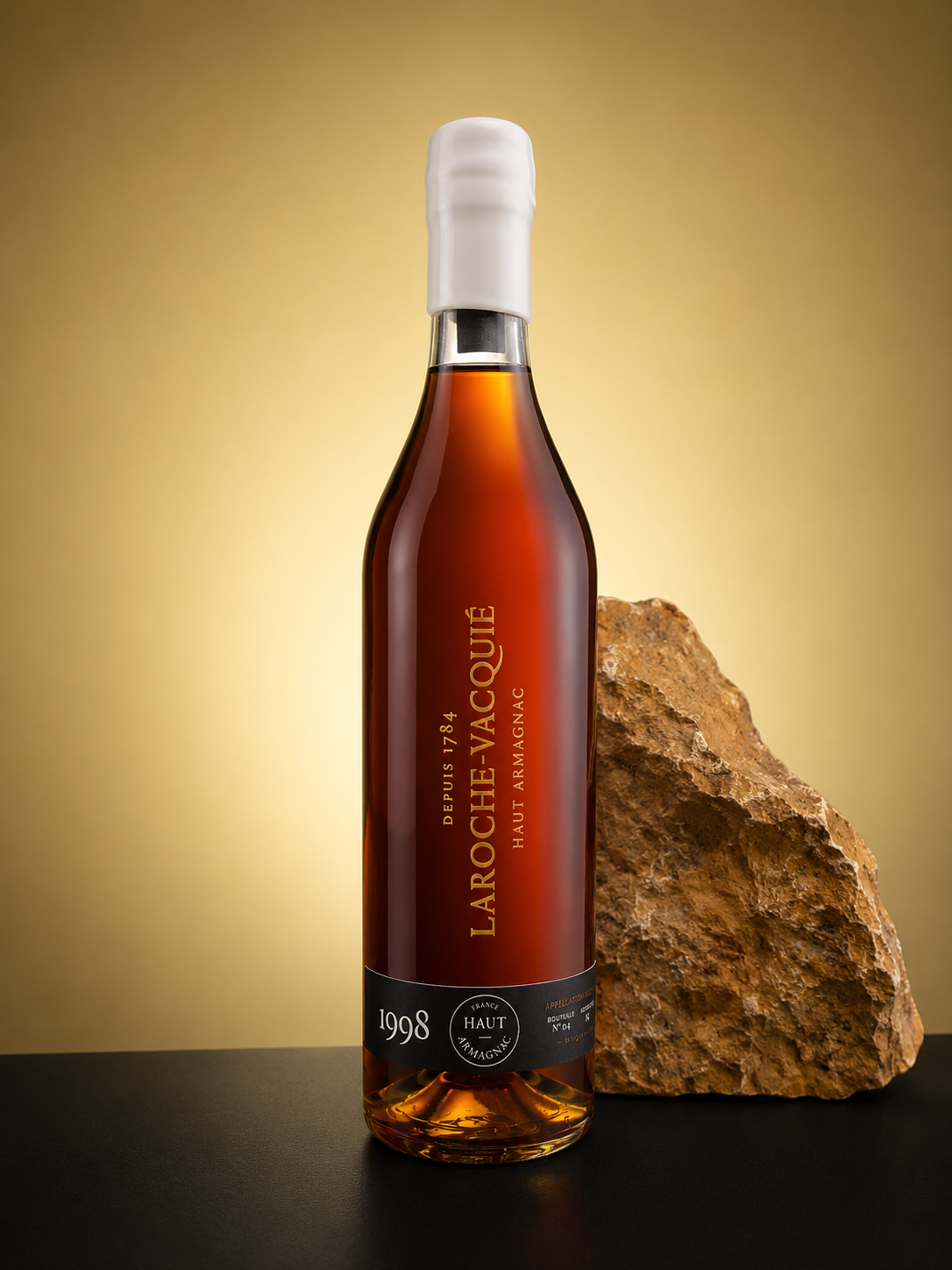
Single Cask - Cask Strength
Unfiltered - Distilled in 1998
Aged in Sessile Oak for 28 years.
1998 — ABV: 49% / Single Cask, Cask Strength, Unfiltered
Only 48 bottles left for this bottling.
Within this bottle lies a rich and structured tapestry of aromas: a rare elegance, with bourbon-like nose, a touch of rancio and a long exotic fruit finish.
Reviews
Best Armagnac, Fest’Armagnac 2026.
Press
-
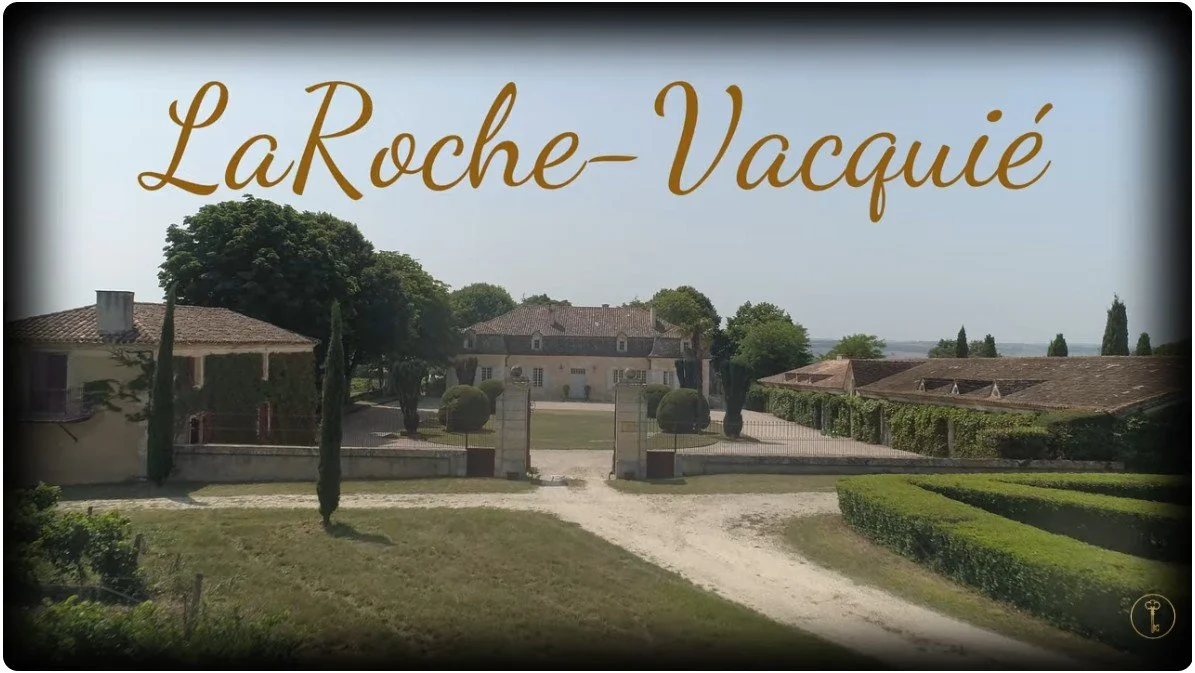
![Image of a drive leading towards a French chateau with the words LaRoche-Vacquié in script across a blue sky.]()
ARMAGNAC TOUR 2025 | PART 1 | LaRoche Vacquie
Anyone who has ever traveled through the Armagnac region understands how deeply this spirit is woven into the lives of the people who make it. Each Domaine carries its own unique and often remarkable family story, reflected in every drop they produce.
Get ready for insightful moments, fascinating encounters, and impressive footage from one of the worlds oldest spirit regions. Join me on a treasure hunt through ancient cellars, where true liquid time capsules are waiting to be discovered.